Please
don’t hit the skip button. Please don’t
go make a sandwich. Please don’t decide
that now is the moment to take the dog out for a walk. Please stay with me while I engage in a
little crass commercialism. I realize
that this is not the Super Bowl and the chances are nil that you will enjoy
this word from our sponsor more than the planned blog content. Still, you never
can tell, can you? Who knows? I might come up with a clever talking lizard
or a miniature donkey colt who dreams of becoming a blogger one day. I might even get a celebrity endorsement… if
I knew any celebrities, that is.
Tomorrow,
it will be two months until Christmas Eve.
It isn’t too soon to start shopping for your holiday gift-giving. The home décor stores have been displaying
Christmas merchandise for weeks now. The
shop-at-home catalogs that jam my mailbox are becoming more and more
festive-looking. QVC has been hawking
partridges and pear trees since June. Disney
World starts their Mickey’s Very Merry Christmas parties the night after the
last Mickey’s Not So Scary Halloween party.
I figure, if the big boys are pushing Christmas, who am I to argue?
I’d
like to suggest a gift that I am sure will delight everyone on your list. How
often do you run across a gift that is appropriate for everyone from your
mother-in-law to your plumber?
Please
consider purchasing mass quantities of my book, Changing My Mind: Reinventing
Myself In Retirement by Dorry Curran to give to all your friends
and family members. Just go to
Amazon.com or Barnesandnoble.com or any other online bookseller and get those
keyboards smoking! I realize that the focus of the book is retirement and some
of your giftees might be several decades away from leaving the workforce. It is never too early to plan. Also, while the framework of the book is
retirement, most of the content can really apply to anyone who is going through
any kind of life transition. And isn’t
that everybody?
Peace
on earth, everybody. Peace on
earth.
Come on,
show a girl a little love! For those of you who have already read the book,
please give me a plug. You can share
your perspective by leaving a comment.
In the alternative, you can email me at terriretirement@gmail.com.
Socrates said that an unexamined life is not worth
living. Far be it from me to argue with
Socrates, but it is possible to have too much of a good thing.
I
think most people think I think too much.
Heck, I think I think too much.
Is that an oxymoron?
I tend
to be a little overzealous in examining my own navel. As I surf the crest of another decade, I
think I am thinking more strenuously than is good for me.
It
isn’t that I think I am old. It is more
that I think I can see the dream of what I thought my life would be fading from
the realm of possibility. I thought my
life would be a little more traditional (while also being deep and meaningful)
than it has turned out to be. I thought
I’d get a romantic proposal and have a beautiful wedding, crammed filled with
memorable, sentimental moments that everyone would think back on in reverie as
the years passed. I thought I’d have a
family of kind, smart, courageous children, who I would gently rear into
successful human beings. I thought those children would go on to restart the
cycle of landmark moments and family celebrations, so that I would continue
having new magical memories throughout my life. I thought my husband and I
would work as a team. I thought we would share a world view and a rhythm of
life. I thought we would think in
tandem.
Not to
put too fine a point on it, but I think I’ve run out of time.
I
think most people in my circumstances would have had a moment of clarity long
ago and realized that the clock was ticking away any opportunity to create that
dream. At some point, I would have had
to blow up the life I had if I wanted to roll the dice on that dream life. I didn’t think I wanted to undergo a violent
overthrow of my happiness at that time.
Truthfully,
I still don’t. While I didn’t get a
romantic proposal and don’t have a husband, I have a partner in life who loves
me. Our relationship may not be romantic
in the same way as movies and reality television shows, but we do have our own
brand of romance and affection in abundance.
I don’t have any children, but I think I have made a positive impact on
other people even if I did not give birth to them. I’ve also had more time, energy, and money to
pursue charitable endeavors and fulfilling, satisfying activities in my own
life. I may not have another generation of people creating new memories and
celebrations for me, but that motivates me to create my own. I don’t think Max and I share all the same
opinions, thoughts, routines, rhythms, and conventions, but I think we do
pretty well as a team.
Still,
I have been thinking a lot more about the “what ifs” as I orbit around my 60th
birthday. I try not to feel sad about the dream life that will never be because
to do so would seem ungrateful in the extreme.
Sometimes, though, I get stuck at the intersection of Wistful and Regret
when the light turns red. I have a
moment to pause and consider the scenery of the place I might have been. Then, the light turns green and I go on with
the wonderful life I have.
I do
think I am exactly where I am supposed to be. That doesn’t mean that I don’t
think about the other paths that might or might not have played out even more
happily for me. I understand that some
people believe in moving heaven and earth to craft the life they want. I admire them, but I also think that isn’t
me. I think I’m more of a “bloom where
you are planted” kind of girl. I think
God put me on a particular path and that He curves that path as necessary,
depending on the choices I make. The
choices I make may alter the details of my life a little bit, but the basic
journey is going to be the same because that is what God has in mind for
me.
This
is a comforting philosophy. I’d like to say I adhere to it all the time. If I did say that, I’d be lying. No matter how much certainty I muster that I
am living the life I was meant to live, I still sometimes covet that other
dream life that is slipping away… no, not slipping away… more like crashing
down a cliff in a giant landslide of age!
What
do you think? Do I think too much? Please share your perspective by leaving a
comment. In the alternative, you cane
email me at www.terrilabonte.com.
To all you fine folks who reached out to assure me I am not abnormal after my recent post, “Different” Doesn’t Always Mean “Worse” ( http://www.terrilabonte.com/2019/09/different-doesnt-always-mean-worse/), I appreciate your support. You are, however, wrong.
Let me
tell you a story which I hope will put to bed all protestations that I am
perfectly normal. Something happened
recently that demonstrates the cherry on top of the sundae that is my abnormality.
I read
that Disney World is going to completely renovate and refurbish the Spaceship
Earth attraction at Epcot. Spaceship
Earth is an iconic Epcot experience. It
is one of the few original Epcot rides that still exists, 47 years later. Many people don’t even know that the ride is
called Spaceship Earth. People normally
refer to it as the “golf ball” ride or that “ride at the entrance of the park
inside that big geodesic dome thingy.” For
the uninitiated, the ride is a slow-moving exploration of the history of human
communication. Currently, Dame Judi Dench
voices the narration. Like many
attractions in the “Future World” section of Epcot, the ride is starting to
fray around its cutting edges. Let’s
face it, the future becomes the past rather regularly in a 47-year time
period. You may ask, if the ride is
about the history of human communication, how does it become dated? The problem is that this history
stopped in 1976 when Steve Wozniak developed the first home computer.
Anyhoodle,
when I read that this bastion of Disney attractions was going to be closed for
two years to reimagine it, I knew I wanted to experience it for about the
hundredth time on my next trip to Epcot.
Max and I went to Epcot the other day, Fast Passes for Spaceship Earth
locked and loaded on our annual passholder cards.
As we
began our trip back into communication, there was a scene showing cavemen
developing a spoken language. I listened
to the cavemen speaking and kept hearing the word “umboday” over and over
again. In a split second, my mind took a
rollicking tour through weirdness and reached an incredible destination. “Umboday” is Pig Latin for “Dumbo.” Hidden Mickey Hunters, eat your hearts out!
It is
abnormal… no, bizarre… that I had this revelation. The real question, though, is how my
disturbed mind got from “I wonder how we know what spoken language the cavemen
had?” to “oh my gosh, that’s Pig Latin for Dumbo!” It’s creepy, but I can even tell you,
roughly, how my mind processed all this.
Here are some of the thoughts that shot through my brain, rather like
the data points zipping through the “modern” super computer the size of a building
that is featured on the ride:
I know Disney did a lot of technical research when they opened Animal Kingdom to make sure the park was accurate and sensitive to the cultures it represented. Did they do the same for this ride?
Wait; how could they research the spoken language of primitive man? How would we know before there were any written records?
There were no tape recorders, nor surviving eye witnesses, right?
Does archeology know anything about languages before the writings on cave walls?
On the Tomorrowland Transit Authority ride (for those of us with a memory… the PeopleMover), the soundtrack includes an announcer paging “Tom Morrow, Mr. Tom Morrow” (Tomorrow… get it?). I heard something about a project or company or character called Yisned (Disney spelled backwards). Is the “umboday” thing a trick?
They are talking about the fact that the world’s body of knowledge was preserved after the fire of Rome because middle Eastern scholars kept copies of most of the books in their libraries. I wonder if any of the titles on those books shown in that scene mean “It’s A Small World” in Hebrew or Arabic or something. That would be cute. They should totally do that in the redesign.
Hmmm… “umboday… umboday”… oh wait, that’s Dumbo in pig Latin!
There
is so something wrong with me! I am
definitely abnormal.
I went
home and posted my observation on Facebook.
I belong to a couple of Disney passholder groups. I thought my fellow Disnerds in those groups would
get a kick out of the information.
Either that, or they would tell me I was late to the party and everyone
who is anyone already knows this. It
turns out that I have never before posted ANYTHING on Facebook quite as
engaging as this. As I write this, over
125 people have already reacted to my newsflash and that number is
growing.
I am
sure that many of you are reading this and thinking, “she’s a total loon.” On the other hand, I seem to belong to quite
the flock of loons, given the Facebook response. Maybe I’m abnormal, but maybe I am also rare
and exotic.
Is it
bad that I want to go back on the ride to see if I can translate the rest of
the caveman conversation? Just what are
they saying about Dumbo? Maybe… “your
children will be scarred for life if they don’t get to ride Dumbo?”
What
is the weirdest thought that has ever struck you? If that is too broad a question, how about
the weirdest thing you’ve thought this week?
Please share your perspective by leaving a comment. In the alternative, you can email me at
terriretirement @gmail.com.
Do we
call a group of flamingos a “flamboyance” because flamingos are such an effective
demonstration of the quality we call “flamboyance” or do we have a quality
called “flamboyance” based on the name for a group of flamingos? What came first… the flamingo or the
flamboyance?
“Why does the English language not have gender-neutral third person singular pronouns? Isn’t it really irritating to have to keep saying or writing “he” or “she” and “him” and “her?” Wouldn’t it be so much easier to be able to use one pronoun? Since I am thinking it up, I think I should get to create the words. I propose the words “te” and “ter” in honor of… well, me.
How
can a state claim to be in the middle of a drought when my feet are regularly
died the color of my shoes because of the torrential rainstorms I must navigate
to get from my car to the grocery store?
How
did I ever get to be 60 years old?
Yes, I
turned 60 the other day. I can’t believe
it. I don’t feel 60. As much as I identify as Tinker Bell, I admit
that there is some Peter Pan in me, too.
I never really grow up. I guess
that means I don’t really grow old, either.
At least, that’s my story and I’m sticking to it.
I
remember asking my father, thirty years ago, “How did I ever get to be 30?” He
was less than sympathetic. He responded, “How do you think it feels to have a daughter
who is 30?” Maybe it is partly because I
do not have children aging in front of me that I lose perspective about the
passage of time. I know it always jolts
me into a cruel reality when I see kids I knew as youngsters “suddenly”
graduating, getting married, or celebrating other such milestones. I gave a baby shower for a friend of mine not
too long ago. That baby now has a
graduate degree, is married, and has a baby of his own. Could it really be that “not too long ago”
was actually the mid-eighties?
I have
school pictures of my godson and his older brother on my wall. The pictures date from a time when you could
articulate their ages with one digit.
Heck, you barely needed two hands to count the number of years in their
ages. I also have a family picture with
them in it from around 2005. They were
two combustible packages of energy throwing themselves into the job of growing
up. I saw them a couple of years ago and
they were both taller than I am. They
don’t even look like the same people.
Do I
look like the same person I was 15 years ago?
I think I do. I look older,
certainly, but I am sure you could pick me out of a lineup today if you met me
in 2004. I probably don’t even look that
different than I did when I was lamenting my 30th year to my father. Older, wrinklier, and creakier,
certainly. I don’t claim that the
ravages of time have left me unaltered.
The point is, I still look like the same person.
I feel
like the same person, too. If anything,
I have aged younger in the last few years.
Free from the stressors of work and many of the expectations I used to
impose on myself, I am much freer than I used to be. My heart is lighter and I am much less…
well… fraught.
I hope
to continue on my current anti-aging path for at least a few more years. I think I can fool my body into believing it
is younger than it is. Some people try
to turn back the hands of time with plastic surgery, trendy clothes, or social
media picture filters. I do it by mind
control. I celebrated my 60th
birthday at the Magic Kingdom. That has got to count for something!
Where did the time go? Do the years sneak up on you, too? Tell us about it! Please share your perspective by leaving a comment. In the alternative, you can email me at terriretirement@gmail.com.
I am
abnormal. Don’t try to talk me out of
it. I am.
I have no children. I have no grandchildren. I am a 59-year old woman living with a 68-year-old “boyfriend.” I don’t comingle finances with anyone. For me, the verb “party” is more about ice cream than alcohol. I am more intellectually-oriented than most people. That doesn’t mean I am smarter. I am not. I just spend more time and energy thinking about things that probably don’t merit the attention I lavish on them. In other words, I am profoundly dweeby. I am also a little neurotic. I eat like a four-year-old. I play like a child. I get giddy about the color pink.
Consider
some of my blog posts that you’ve read.
How many adult women spend money to be transformed into Tinker
Bell? How many people believe God talks
to them at an Orlando theme park? How
often do you run across someone who names the random wild animals that roam
through her backyard? Don’t you think it
is a little unusual for a grown-up to hunt for the Elf On The Shelf every
morning in December?
Go
ahead. I dare you. I defy you to try to
convince me that I am normal.
When I
was younger, it used to bother me that I was so different from virtually
everyone I knew. I struggled with
depression before I even knew what depression was. A lot of those struggles
presented as anxiety over being such an outsider in the normal landscape of
life. I always felt like I was on the
outside looking in. I felt powerless to participate in “real life” like other
people because I was so weird and abnormal.
I guess it never occurred to me that my life, as weird and abnormal as
it has always been, is as real as anyone else’s life.
I
always felt like I just wasn’t good enough to have the life normal people get
to have. Maybe because it seemed out of
reach, I craved it more. For a long time, I limited my life because I believed
I wasn’t worthy of happiness. This fable
that I told myself damaged many facets of my life. It destroyed many opportunities for joy. At other times, I postponed living
abundantly, waiting for my reality to change into a more traditional life. I would regret all this wasted time, except
that I think everything I’ve experienced was necessary to get me where I am
today. Sometimes, you have to take a few
steps into pain in order to leap ahead to satisfaction.
At
some point, I came to terms with my abnormalcy.
I learned to live with it and to be happy in spite of it. Part of me continued to wish for a “normal”
life, but I decided that there was no point in wasting the life I had by living
in a pit. I crafted some reasonable facsimile of what I thought of as a “real
life.” I enjoyed it the way you can enjoy watching a documentary on television
about a place you never get to go. I
tried to fit in as much as I could, always conscious that I was different. By trying so hard to mask my abnormalcy, I
believe I heightened my sense of fear and shame about it. It was like I was
living with some deep, dark secret that would shatter my world if anyone ever
uncovered it.
Somewhere
along the line, things changed. I think
retirement had something to do with it.
When the financial stakes of not fitting in were no longer a factor, I
seemed able to embrace my abnormalcy a little more. Maybe it is just that I got
tired of waiting to become normal. I’ve decided that maybe “different” doesn’t
have to mean “worse.” Maybe it even
means “better” … or, at least, better for me. I’m quirky and weird and
unexpected and kind of cute. I’m
embracing the quirk. And, you now
what? It’s fun. I can be happy… not in
spite of the abnormalcy, but because of it.
There
are still times when my insecurities bulldoze me. Every once in a while,
something happens that shines a brilliant spotlight on the fact that I am
abnormal. I want to crawl into a hole somewhere. I feel so exposed, like the world has
discovered my deep, dark secret…. that I am not good enough for a “real
life.” It doesn’t happen often, though,
and I recover fairly quickly with no permanent harm done. Most of the time, I like being good old
abnormal me and I love my own personal version of “real life.” I’ve noticed
that other people seem to enjoy me, as well.
They seem to appreciate being tourists in my abnormal world. I find that
when I slip my leash and show the people around me all my authentic abnormalcy,
everybody seems to be happier. I never
would have thought of myself as “engaging” when I was in search of normalcy,
but now I think I kind of am.
Retirement
is a great time to embrace your abnormalcy.
After all, maybe you aren’t the one who is on the outside looking
in. Maybe you are the one who is on the
inside and everyone else is looking in. You might want to open a window and let
them in.
Have
you ever felt “abnormal?” How have you dealt with it? Have you found a way to indulge your own
brand of abnormalcy in retirement? Please
share your perspective by leaving a comment.
In the alternative, you can email me at terriretirement@gmail.com.
I just
returned from a trip to Las Vegas. A few
weeks before our trip, I saw a t-shirt in a tourist shop in Daytona Beach. The t-shirt was neon pink and depicted a mug
shot of Tinker Bell, supposedly taken upon her arrest for drunk and disorderly
conduct. The idea was so piquant and so
decidedly not me, I couldn’t resist the irony.
I bought the shirt with the intent of wearing it in Las Vegas.
I
thought that wearing a shirt with picture of a tattooed Tinker Bell arrested
for drunk and disorderly conduct would be a hoot and a holler. Just the fact that I would use a phrase like
“hoot and a holler” probably explains why me wearing such a shirt was so incongruous. I’m about as edgy as a circle.
In
addition to the fact that any “edginess” I have is curved, I have always been
the poster child for a “good girl.” I
doubt I’ve ever given anyone a single moment of real trouble in my life. I have great respect for the rules. Some of you may remember the tv show “Welcome
Back, Kotter.” There was a goody-goody
character on that show named Judy.
Whenever the rowdy Sweathog kids got one over on her, she would wail,
“Mr. Kotter! Mr. Kotter! They aren’t following
the ru-wells!” Even as a teenager, I
remember feeling uncomfortably aware that I was more like Judy than I wanted to
admit. Even now, I tend to sit quietly
at my oar, not wanting to rock the boat.
I wait for the “walk” sign at intersections even when there are no cars
in sight. I don’t cheat on my taxes. I have never smoked or taken drugs, except
for those prescribed for me in meticulous compliance with the law. I’d rather eat ice cream than drink alcohol
any day of the week. In purchasing the t-shirt, I felt like The
Rebel Without A Rebellious Streak.
Then,
I went to Las Vegas. I was prepared to
release my wild and crazy side. When the
day I planned to wear the t-shirt came, I felt oddly embarrassed. Given that women all over the street were wearing
clothes much more embarrassing than my tipsy Tinker Bell shirt, it surprises me
that I felt any anxiety at all. I’m not
sure why I was embarrassed. I think I
expected some smirks and sardonic looks. After all, I would think it would
disconcert the average random Las Vegas passerby to come across me in that
shirt. I was a pudgy, bespectacled, almost-elderly,
and obviously unhip tourist wearing sensible shoes… and a t-shirt seemingly
designed for a college spring-breaker. I
was a walking contradiction.
In
reality, I generated almost no reaction.
A few salespeople with ulterior financial motives complimented me on
it. Other than that, no one appeared to
notice it. I figure I’m either edgier
than I ever knew or everyone was too hungover to appreciate the irony of the
situation.
I wore
my shirt, proclaiming Tink’s drunk and disorderly conduct. However, I don’t think I lived up to my
shirt. Even though I was in Sin City,
the most disorderly thing I did was leave shopping bags strewn around the hotel
room. I did have one glass of wine while
eating what is touted as “the world’s best meatball” at Martarano’s
Restaurant. However, I think the size
and density of the meatball prevented any possibility that I would get drunk. I
screamed like a rebellious teenager at a Beatles’ tribute show. I lost about $30 a day to penny slot
machines. I had a great time in Las
Vegas, but I do have to say that, all and all, it was pretty tame.
Clearly,
Tinker Bell was framed.
Do you
have a wild and crazy side? Tell us
about it! Please share your perspective
by leaving a comment. In the
alternative, you can email me at terriretirement@gmail.com.
Have a
rebellious day…. When you aren’t following the ru-wells!
Terri/Dorry 😊
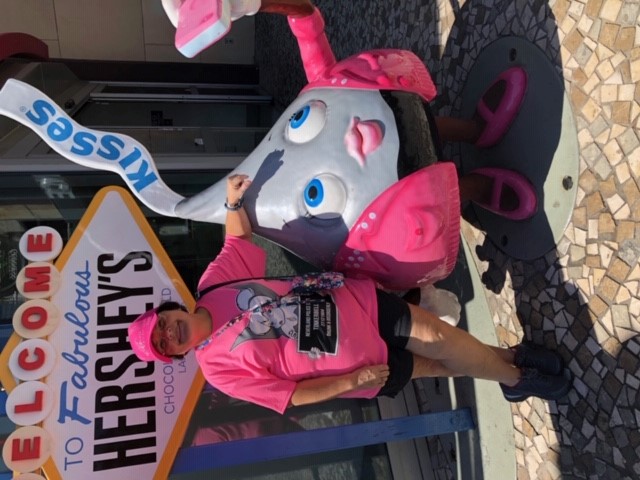
Here I am… up close and personal in my Tinker Bell mug shot shirt.
Obviously, I am a menace to society!
I didn’t even buy any chocolate. Pixies just get a bum wrap!
I once
had a friend who told me she felt sorry for me because I did not have a
sister. She was very close to her own
sister and could not imagine how I got through life being my parents’ only
daughter.
It is
true that there is something very special about a sister relationship. Knowing each other and loving each other and
growing through life together is a source of great strength and joy. God gave women sisters to be companions on
the journey. When one sister falls,
another is there to laugh… and then help her up. When one sister goes through an experience,
good or bad, other sisters rejoice with her and mourn with her. When a sister is going down a dark path, it
is a great blessing to have another sister shining a light and suggesting a
different direction.
Yes,
sisterhood is a wonderful thing. My
friend had it wrong though. I do have sisters.
I have
a sister who saw me through a painful divorce.
She stayed on the phone with me for hours at a time, listening to me cry
and despair of ever being happy. As the years progressed, she supported me in
everything I’ve ever done. She helped me build confidence and joy in myself.
Without her, I don’t know that I would have lived beyond age 30.
I have
a sister who listened and observed and figured out the best things to do for me
while I struggled through my mother’s decline and eventual death. She just knew what I needed and provided
it. She is also absolutely the best
person I have ever met at knowing the exact right thing to say all the
time.
I have
a sister who came to me for career advice, blossomed because of the
conversations we shared, and included me in her joy when her efforts bore
fruit.
I have
a sister who walked with me on my road to reception into the Episcopal Church
and continues to support me in my faith.
She respects me. She understands
me. She loves me.
I have
a sister who let me help her when things were difficult for her. Instead of pushing me aside when she was
mourning, she allowed me the honor of doing something for her. In letting me take something off her plate,
she gave me the satisfaction of helping and also showed me that she loved me
enough to let me close.
I have
a sister who went with me when the Disney Fairy Godmother reimagined me into an
aging, chubby Tinker Bell. Not only did
she go, but she enjoyed it and could not imagine why anyone would think it
weird.
I have
a sister who is willing to gently tell me when she thinks I am doing something
wrong… and also convinces me that I am lovable in spite of the unlovable
action.
I have
a sister to whom I can say anything without fearing that I will be judged,
misunderstood, or hurt because of it.
I have
a sister who, while my ego and sense of sanity crumbled during a few
particularly painful interludes during my work life, could always convince me
that “it’s not you; it’s them.” Without her, I think I might have experienced a
psychotic break with reality.
I have
sisters who make me feel like the joyful child I used to be. I have sisters who make me feel like the
carefree teenager I never was. I have
sisters who admire the adult I am today.
Often, all these sisters are the same people.
These
are just a few of my sisters of the soul. It is true that I have no sisters by
birth, but I am abundantly blessed with my sisters by selection.
Who
are your “sisters?” Are they by birth or selection? What makes the relationship so special? Please share your perspective by leaving a
comment. In the alternative, you can
email me at terriretirement@gmail.com.
Some
time back, I proudly declared, “as long as I had a checkbook, my hair would not
be grey.“ (http://www.terrilabonte.com/2016/11/the-anti-frump/) I
have been coloring my hair since I was sixteen and I could not imagine a time
when I would be abandoning that practice.
Recently,
something happened that made me question my stance on applying toxic chemicals
to my head. My scalp started to
itch.
If I
am absolutely honest and face the facts, it was happening for several
months. I go to the hair salon every
four weeks or so. I’d come out of the
salon, feeling sassy and stylish, but also scratchy. At first, it only lasted a day or so after my
salon visit and I didn’t notice it much.
I thought it was a fluke. As the
months progressed, the itchiness seemed to last longer and longer. It also seemed to get more intense, urgent,
and severe. I scratched my scalp like a
dog with fleas bites her coat. The
discomfort was getting harder to ignore.
I thought about what could be causing the issue, but didn’t think about
the hair coloring. I’d been coloring my
hair so long, I almost forgot that it was an unnatural process. I was also doing a keratin treatment to make
my unruly hair more sleek, straight, and manageable. While that wasn’t anything new, it was
certainly newer than the hair color. I decided to try discontinuing the keratin
treatment to see if that solved the itchies.
It did help a little, but I was still scratching more than socially acceptable
when it was time to go back to the hairdresser.
I
realized, with growing horror, that I might be having a reaction to hair
dye. As I said, I have been dying my
hair for years with no apparent ill effects.
Still, I know people can develop allergies over time. I scoured the internet looking for a
solution. I talked to my hairdresser. There did not appear to be any remedy except
to swear off coloring my hair. I found
that idea so distasteful, I could barely talk about the possibility. My hairdresser sketched out an exit plan for
me to stop the coloring with the least amount of angst, but it boiled down to
her proclaiming, “no matter what, it is a process.” You see, if I stop dying my hair, not only do
I have to deal with my real color (which is presumably two shades greyer than
“old”), but I will have to endure many, many months of the oh-so-attractive
“skunk look” that happens when my roots become visible.
I told
my hairdresser that I wasn’t ready to stop coloring my hair just yet. For one thing, I was getting ready to leave
on vacation and I figured I could put my head through the chemical wash again
in order to ensure one more batch of vacation pictures in which I did not look
like something the cat dragged home. It
was in the back of my mind, though, that I would probably have to start that
“process” my hairdresser so appealingly described at some point in the near
future.
As it
turned out, my itchies disappeared. I am
not sure why it got better. I changed
conditioners at home and went back to using the heat protection cream I
discontinued using some months ago. I’m
not sure if that was the solution. I typically was most itchy right after the
salon, where they presumably coated my hair with every luxurious potion known
to woman given the price I was paying. Whatever the reason, I am pleased to
report that my scalp is no longer itchy.
The
whole episode did start me thinking, though.
What was it about the notion of going grey that was so repellent? Why was I willing to suffer constant,
desperate itching… to say nothing of whatever other health risks I undertake
when I let toxic chemicals seep into my skull… simply to avoid it?
It
isn’t that I think gray hair is intrinsically unattractive. I see woman all the time who have gorgeous
silver and gray locks. They still look
polished and youthful by taking good care of their hair. It isn’t the fact that
my hair has always been the only aspect of my looks to which anyone could
remotely apply the term “pretty.” I
never felt that some reasonably attractive hair could overcome the general
unattractiveness of my appearance. Being
vain about my hair would come under the heading of “rearranging the deck chairs
on the Titanic.” I can certainly leave
the deck chairs be. It isn’t even the
months or years of “skunk look” during the growing out phase that terrifies
me. That is a self-limiting condition
and will eventually pass.
I
think what really bothers me is that, if I stop coloring my hair, I won’t look
like “me” anymore. It is not that I am
afraid that the person in the mirror will look old. I am afraid the person in the mirror will
look unfamiliar. Will I think about
myself differently when I see the grey hair?
Will I behave differently? Will
other people see me anymore or will they just see grey hair?
I know
that the answer to all these questions is probably “it depends.” I think the answers are probably at least
partially within my control. Maybe I
should not be spending so much time wondering about whether these things will
happen and spend more time on figuring out how to prevent them from
happening. The truth is, I am the same
person whether I have brown hair or grey.
If I want the world to believe that, it is up to me to do some marketing
of myself. More importantly, if I want
to believe it, it is up to me to develop a sufficiently strong sense of self to
withstand the greying of my hair.
When
we discussed this subject before, many of you mentioned that you were fine with
your grey hair. Did any of you “go grey”
after years of coloring your hair? What
obstacles or difficulties did you face? How
did you overcome then? Please share your
perspective by leaving a comment. In the
alternative, you can email me at terriretirement@gmail.com.
Yes,
please! You can order a paperback or
electronic version of Changing My Mind: Reinventing
Myself In Retirement by Dorry Curran at Amazon.com
and other online booksellers.
My
mother’s birthday is tomorrow. She died
about two years ago. I thought I had
been mourning her death in a pretty healthy way, moving through stages of grief
appropriately. I felt that I was moving
forward towards wholeness. I thought the
worst was pretty much behind me.
I
think I was wrong.
Those
of you who have been traveling with me know that, when my mother died, I
experienced a wide variety of emotions.
I tried to feel each one instead of pushing it aside so I would not
create a dark prison of grief within myself.
It has been a difficult, painful process, but also satisfying in that I
feel like I’ve mourned with a certain amount of courage and integrity.
The
one thing I thought I was spared during my mourning was the problem of
regret. When my mother died, I felt
fairly satisfied with my role in her last years. I believed I had done my best. I thought I
was able to let go of any self-loathing about what I “coulda shoulda”
done.
Once
again, I think I was wrong.
It
seems I do have regrets. Big ones. But I
think I have just been too afraid to face them. They are menacing. They are terrifying. They are threatening to start building that
prison of grief. It might be time to show them the light of day.
I
first became aware of the regrets around Mother’s Day this year. Some of you may remember my story about the
day I stopped holding my mom’s hand and vacated the room when family came to
visit her roommate (http://www.terrilabonte.com/2019/05/hug-a-mom-today). I
think that memory opened the door to my regrets. I have
been regretting that day ever since.
I’ve been regretting it so much, it hurts. I regret that I didn’t just
stay in the room and hold her hand when the other people came. I regret that I didn’t hold her hand more
often.
There
are other regrets, as well. Sometimes, I
even regret things that I was absolutely convinced were the right thing to do
when I did them. For instance, I regret
not being with my mom when she passed. I
was always sure my mom did not want me there when she died. Now, I wonder. It would have been difficult to tell when the
time was coming, admittedly. She had
been slowly leaving me for so long, it was hard to know when the door was
finally going to close. I had been
through the “it may be just a few days” phase several times. Apart from staying at the nursing facility
full time for several weeks or months, there would have been no way to know the
critical moment. During those last few
days, which I didn’t know were going to be the last few days, the hospice
nurses thought she might be getting close.
She died in the very early hours on a Saturday morning. When I saw her on Friday, she drank a whole
can of Ensure… after not eating anything for days. My hospice angel said that it seemed that
maybe she wasn’t ready to go yet. Less
than twelve hours later, she was gone.
In
some ways, that chain of events should reassure me that my mother’s intent was
to die without me there. On some level,
she may have been trying to fool me into believing I could go home because it
wasn’t time, even though she knew it was.
It doesn’t really matter whether I am right or wrong about the way I
interpret her actions. I still regret
not being there.
I
regret that I was not able to figure out what my mother was trying to say a lot
of the time. I tried so hard, but I
failed much of the time. I resorted to
trying to interpret her nonverbal cues and I will never know how good a job I
did of that. I am sad because I don’t
know if I advocated for her properly because I wasn’t sure what she wanted or
needed.
Then
there is the biggest, most shameful regret.
I regret that I did not have her at home with me. I regret that she lived in a nursing
home. I know there are a lot of good reasons
she was there. She was bedridden. She needed extensive wound treatment and
medical comfort care. She was
incontinent. Her cognitive and
communicative abilities were impaired. She needed twenty-four hour a day
assistance with activities of daily living. It was good that she had a network
of loving people who genuinely cared for her and attended to her needs. I was with her just about every day, but, if
she had been at home, it would have been only me with her. She always responded well to the caregivers
who visited her room and made her laugh.
I’m not sure I was up to making her laugh, much less taking care of all
her needs. I don’t think I honestly
could have taken care of her at home.
Let’s be truthful. It was all I could do to make it through that time
when there was a whole team of people caring for her. Still, I regret it bitterly. I feel like I should have been able to care
for her at home.
Truth
be told, I have hit a rough patch. I am
in a bit of a dark place. I have woken
up crying several times over the last few nights. In the shower this morning, I couldn’t draw a
deep breath. My heart felt ready to
explode. There was a dead heaviness in
the center of my abdomen. All I wanted
to do was scream, as if by pushing sound violently out of myself, I could also
dispatch the pain. It is even hard to
write this because it hurts so much to realize how much more I wish I was.
As I
said, I have been struggling with these feelings of regret for several months
now. I work hard to manage them. I’ve found a few strategies that seem to help
make things easier to endure.
First,
there is prayer. I have found that
laying my grief and my regrets at God’s feet is the best way to unburden myself
from it. Not only that, but prayer has helped
me find other ways of dealing with the regret.
For one thing, I know that my mother is in Heaven. Her heart holds no regrets. She experiences only joy and love. She has long since forgiven me for every
weakness, failing, and misstep.
Secondly, instead of wallowing in my regrets, I try to invest that
energy in doing ordinary things with extraordinary love for the people I still
encounter in this world. It is sweetly
satisfying to use a little of the love I have for my mother to brighten someone
else’s life. It is part of her legacy to
me.
Still,
all my strategies don’t always work. Some days, I run smack into one of those
grief prison walls and I just give up. It
hurts. Today is one of those days.
Have
you experienced feelings of regret after the death of a loved one? How do you manage those feelings? Please share your perspective by leaving a
comment. In the alternative, you can
email me at terriretirement@gmail.com.
Have a
regret-free day!
Terri/Dorry ☹
These are flowers I had sent to my church this week in memory of and thanksgiving for my beautiful mother.The memory flowers at the feet of the Madonna and Child